☀️ The Sun at the Top of the World
A Guide for North Pole City Visitors
Welcome to NorthPole.City where Santa’s workshop hums year-round as little elves scurry about with glorious glee! Rudolph is always on standby to take you aloft into the Arctic skies. Frosty is eager to tell you about the alluring auroras of the Great North and the Christmas Star that does a figure eight about the local North Pole City skies every 12 hours. The sky does one other thing that would baffle anyone who grew up south of the Arctic Circle. One of the strangest things about living at 90° North is what the Sun does or doesn’t do. Let’s walk through the enchanted year.🎅 [Current North Pole Daylight Map]
🌞 Summer Solstice (Around June 21) — The Midnight Sun
The elves are working overtime preparing for Christmas In July. Santa’s workshop lights are off because they don’t need them.
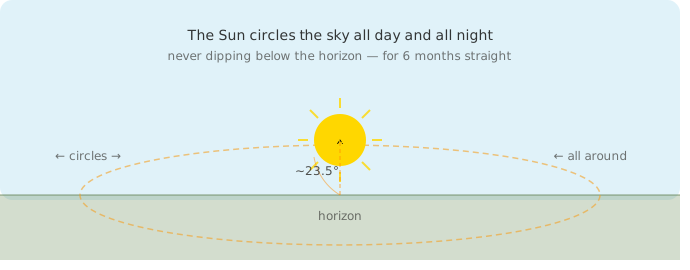
At the North Pole on the summer solstice, the Sun does something almost magical: it never sets. Not even close. Instead, it glides in a slow, lazy circle around the entire horizon, like a golden marble rolling around the rim of a bowl. It sits at about 23.5° above the horizon all day long. It’s never high overhead, but always there, bathing everything in warm, golden, slanted light.
The Magical Midnight Sun
This is actually the beginning of a 6-month stretch of continuous daylight. The Sun rose back around the Spring Equinox and won’t set again until the Fall Equinox. Some people joke that Frosty the Snowman and Jack Frost flee to the South Pole during the seriously sunny Summers. However, it’s still moderately cold, and they both appreciate sunlight.
🌅 Autumn Equinox (Around September 22) — The Long Goodbye
Santa does a final pre-season inventory check as the Naughty Or Nice List is nearly finalized. This is the last day of full sunlight for a while as North Pole City prepares for Halloween.
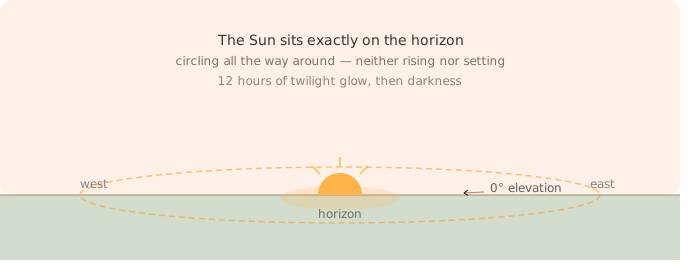
At both the Spring and Autumn Equinox, the North Pole experiences the most dramatic sunset and sunrise imaginable. The Sun spends the entire day skimming exactly along the horizon, circling all the way around the compass at 0° elevation. It doesn’t rise above it or dipping below. It’s neither day nor night. It’s a 24-hour, 360° sunset creating a continuous panorama of breathtaking colors.
The Longest Sunset
The sky glows in shades of pink, orange, and purple in every direction simultaneously. It’s genuinely one of the most spectacular sights on Earth. Then, as autumn deepens, the Sun finally slips below the horizon… and doesn’t come back for six months. Santa’s workshop switches to the Christmas Star and aurora borealis for ambient lighting.
(The Spring Equinox, around March 20, works the same way in reverse — the Sun reappears on the horizon after the long polar night and begins its slow climb.)
🌑 Winter Solstice (Around December 21) — The Polar Night
Peak Christmas Season at North Pole City. The Winter Yule Ceremony takes place on the longest night of the year. No sunlight required.
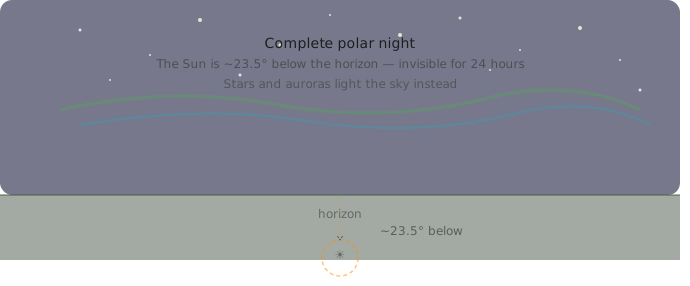
On the winter solstice, there is zero daylight at the North Pole which has been the case for months. The Sun is sitting about 23.5° below the horizon, as far from view as it ever gets. There is no dawn, no dusk, no hint of a glow on the horizon. Just stars, and if you’re lucky, the Northern Lights dancing overhead.
The Longest Night Of The Year!
This is actually Santa’s favorite time of year. The darkness is total and peaceful, the reindeer are rested, and the elves have had half a year of 24-hour sunlight to build up the gift inventory. On the night of December 21st, Christmas is at hand, and the workshop is running at full capacity under a sky blazing with auroras. Rudolph’s nose, for once, is genuinely useful for navigation.
🌅 Spring Equinox (Around March 20) — The Sun Returns
The elves cheer. Frosty nervously checks the thermometer. Rudolph squints for the first time in months. Santa and the serene citizens of North Pole City prepare for Easter after a lucky Saint Patrick’s Day celebration.
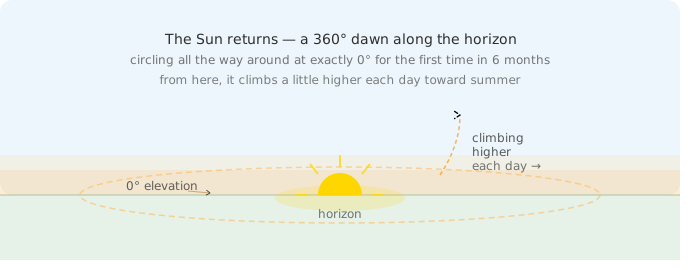
After six months of starlit darkness, the Sun makes its grand return to North Pole City on the Spring Equinox. Just like its autumn farewell, it arrives not with a dramatic sunrise from the east but by slowly materializing along the entire horizon at once. A 360° dawn that glows in every direction simultaneously. The Sun skims right along the horizon all day at 0° elevation, circling the compass without ever truly rising above it or dipping below.
The Longest Sunrise
It’s a day of perfect balance. The Sun is neither above nor below, and day and night exist only as a concept, not a reality. From this moment forward, the Sun will climb a tiny bit higher in the sky each day, eventually reaching its peak at the Summer Solstice. For the residents of North Pole City, this is the start of six magical months of midnight sun.
Santa opens the workshop skylights. The elves put away their headlamps. Spring has arrived at the top of the world. The key visual difference from the Autumn Equinox illustration is the upward arrow showing the Sun’s direction of travel from this day forward. The brighter golden color suggests optimism and renewal, and the greener, warmer ground hints that better days are ahead. On the other hand, the autumn version’s more muted, fading palette signals the coming darkness.
📊 Quick Reference: The Sun at 90° North
| Event | Date (approx.) | Sun’s elevation | Daylight |
|---|---|---|---|
| Spring Equinox | ~March 20 | 0° (on the horizon) | Sunrise after 6 months of dark |
| Summer Solstice | ~June 21 | 23.5° above horizon | 24 hours (for ~6 months) |
| Autumn Equinox | ~Sept 22 | 0° (on the horizon) | Sunset — last light for 6 months |
| Winter Solstice | ~Dec 21 | 23.5° below horizon | 0 hours — total polar night |
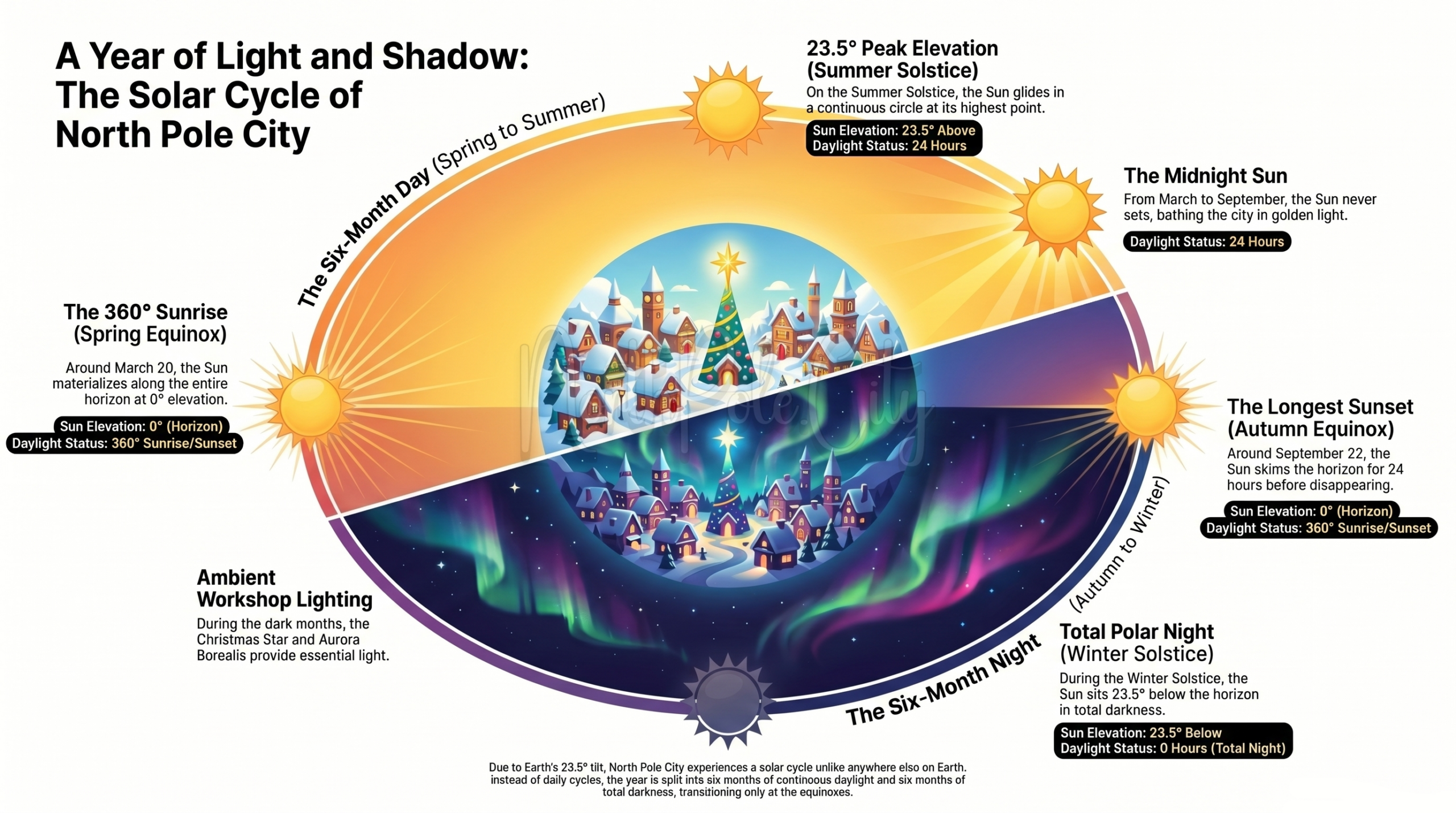
The secret behind all of this is Earth’s 23.5° tilt. Because our planet leans as it orbits the Sun, the North Pole spends half the year tilted toward the Sun (continuous daylight) and half the year tilted away (continuous night). There’s no in-between at 90° North — no “shorter days” or “longer nights.” Just an on/off switch that flips twice a year, right at the equinoxes.
So the next time you’re planning a visit to North Pole City, pack accordingly. Summer? Bring sunglasses — you’ll need them at 3 a.m. Winter? Bring a good coat, skip the sunscreen, and keep your eyes on the sky. The auroras are worth the trip all on their own.🌞
📝Santa’s Winter Wonderland isn’t exactly at the geographic North Pole, but it’s close enough that the sun’s path looks exactly the same. Read About The Location Of North Pole City…🧊
Related Links
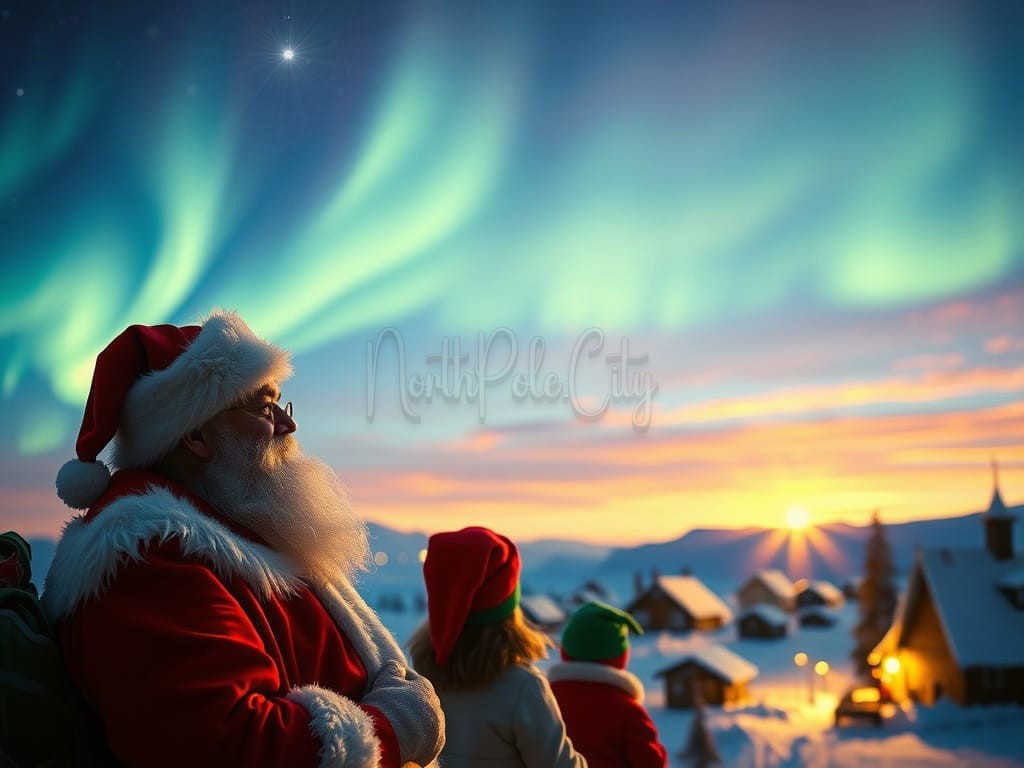
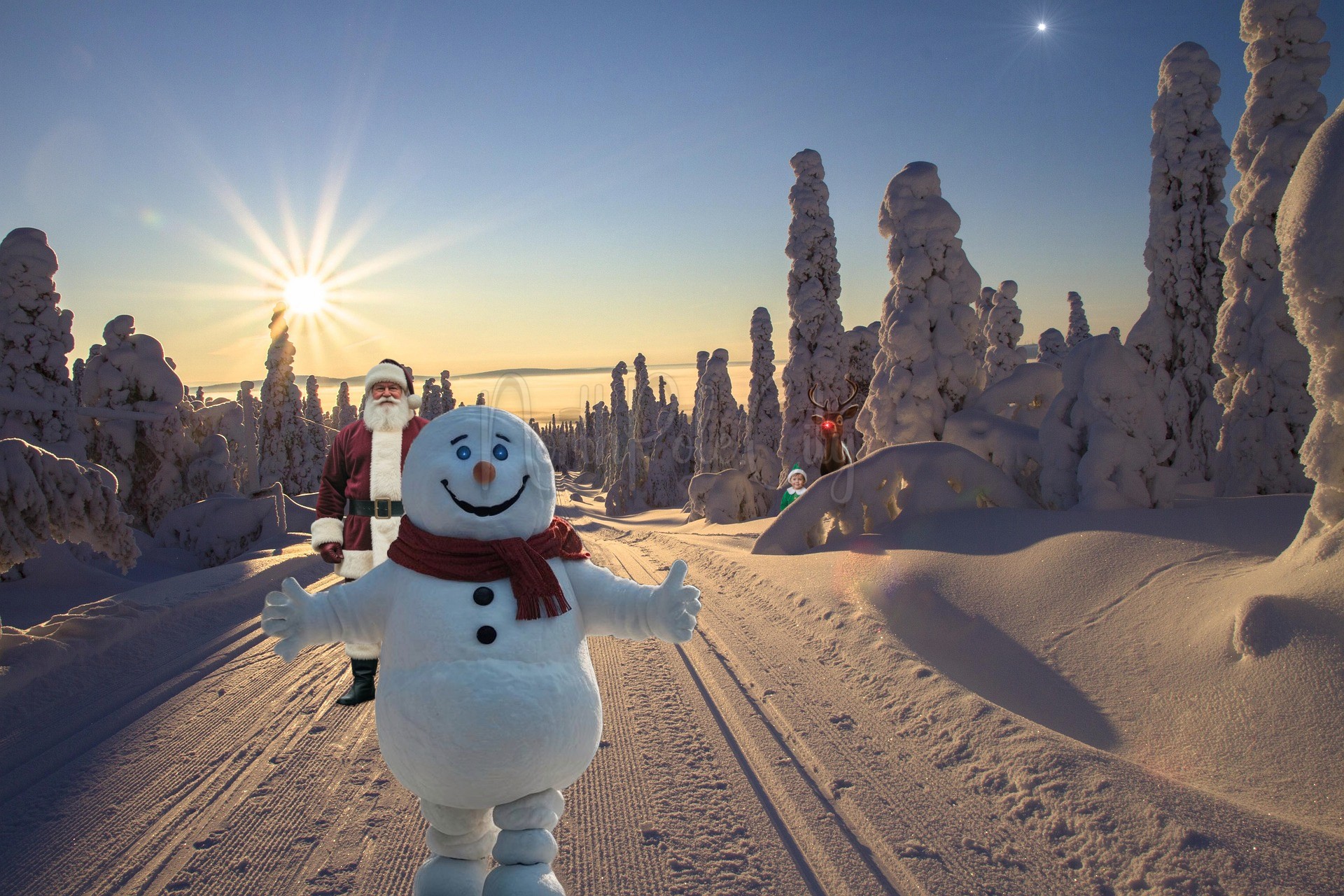
Santa and friends watch the everlasting sunset with the Northern Lights and Christmas Star in the serene skies above.